A Starter’s Guide to House Edge Rules in Casinos
Posted by By Bigicedog at 2 September, at 20 : 22 PM Print

As we enter the world of online gaming, the bright lights and promises of big wins can easily divert our attention from the one mathematical truth that controls every spin, deal, and roll. That truth is the house edge. It signifies the built-in statistical advantage that ensures the casino profitable over millions of hands while still giving us a fair shot at short-term luck. Grasping this concept is not about dampening the excitement; it is about furnishing ourselves with the knowledge to pick smarter bets, extend our bankroll, and recognise which games genuinely offer more value for our time on the platform.
The way the House Edge Truly Signifies
The house edge is the mean percentage of each wager that the casino expects to retain over an immense sample of rounds. It is not a fee taken from our balance after every bet, but rather the gap between the true odds of an event occurring and the payout odds the game offers. On a single spin of a European roulette wheel, the true odds of hitting a straight-up number are 36 to 1, yet the payout is only 35 to 1. That one-unit shortfall, spread across all possible outcomes, solidifies into a 2.70% edge. The magic of this system is that it operates unseen, allowing us to enjoy winning sessions while mathematically guaranteeing long-term profitability for the house.
This percentage varies wildly between game categories, and even within the same game depending on our betting choices. The house edge does not predict individual session results; variance ensures we can walk away ahead on any given evening. But over tens of thousands of spins or hands, the actual return will drift closer and closer to the theoretical figure. That is why serious players track edge percentages as closely as bonus terms. The lower the edge, the less uphill the long-term climb becomes. At Crusado Casino, we encourage exactly this kind of informed play, because a confident player who understands the mechanics is always a happier one.
Money Management Viewed Through the House Edge
Once we truly internalise that every bet involves a long-term cost relative to its house edge, bankroll management ceases to be vague advice and becomes a precise arithmetic exercise. If we allocate £200 for an evening’s entertainment and choose to play a game with a 2% house edge, we can estimate that wagers totalling £2,000 over the session will likely erode roughly £40 on average. This enables us to reverse-engineer our bet sizing. We can opt to play £5 hands of blackjack at a 0.5% edge for hours with far less expected drain than £2 spins on a 5% edge slot for the same duration, even if the slot features a flashier bonus round.
Establishing loss limits and session timers according to this expected loss calculus keeps the experience firmly in the entertainment zone. We should regard the house edge as the price of admission, much like buying a theatre ticket. The cost turns problematic only when we surpass the scope we have budgeted for. Structured play also avoids the classic trap of chasing losses with larger bets on higher-edge games, a spiral that can rapidly outpace the sober maths we originally intended to follow. Responsible gambling tools integrated into licensed platforms, including deposit caps and reality-check pop-ups, reinforce this discipline externally when our internal resolve weakens.
Licensing Security, and the Assurance of Fair Edge Implementation
The house edge figures we have covered in this guide depend entirely on the assumption that games are honest and payouts are honoured. This is the point where regulation becomes the bedrock of everything. The UKGC licenses and supervises operators that serve British players, enforcing strict technical standards on random number generators, game integrity testing, and client fund protection. A casino with a UKGC licence has to submit its games for external testing by approved testing labs, which confirm that the real RTP matches the advertised figure within acceptable statistical tolerances. This is no a quick check; it is an ongoing obligation.
We ought to always verify a casino’s licence on the footer of its homepage, where the license number and licensing body logo are required to be displayed by law. Following the link to the official register confirms current status. Further security features, such as SSL protection for information transfer and PCI-compliant payment gateways, shield our personal and monetary details from unauthorised access. The combination of a confirmed licence and strong encryption ensures that the theoretical edge we are facing is exactly as the numbers show, and our winnings will arrive when we request them. This guarantee converts edge percentages from theoretical ideas into trustworthy planning aids.
Mobile and Device Support While Preserving the Advantage
Current casino platforms offer the full suite of games to smartphones and tablets using mobile-optimized sites or dedicated apps, and the mathematical characteristics of the games remain identical across devices. An European roulette game retains its 2.70% house edge if we spin it on a desktop monitor, an iPhone, or an Android tablet. The RNG algorithm and paytable are server-side and device-agnostic. What does change is the user interface layout, with buttons and menus adapted for touch navigation and mobile screens. The speed of mobile play can also be slightly quicker because we are not bound to a desk, which turns idle moments into active gambling time—a behavioural factor worth monitoring.
We should verify that the mobile platform supports our preferred payment methods and live chat functions, and that game loading times are acceptable on a standard 4G or 5G connection. A platform that optimizes its mobile experience without eliminating game variety or account management tools signals a commitment to modern player habits. Playing on mobile does not diminish the house edge or modify bonus terms; it simply changes the environment. The identical principles of bankroll management and edge-aware game selection apply, perhaps with even more discipline because the convenience of a device in our pocket can provoke impulsive session extensions.
In what manner Bonuses and Wagering Requirements Correspond with the Advantage
A welcome bonus can convert a game with a 1% house edge into a negative-expectation trap or a truly worthwhile enhancement, depending entirely on its terms. The standard online casino bonus multiplies our deposit by a certain percentage and then attaches a wagering requirement, often expressed as a multiple of the bonus amount or the bonus plus deposit sum. For example, a 100% match up to £200 with a 35x wagering requirement on the bonus implies we must wager £7,000 before we can withdraw any bonus-derived winnings. During those £7,000 in wagers, the house edge will grind away at our balance according to the game we choose to play.
Clearing a bonus on high-RTP blackjack or low-edge roulette bets is a well-established strategy for value-conscious players. However, operators understand this and frequently assign different contribution percentages to different games. A slot might contribute 100% of each wager towards the requirement, while blackjack contributes only 10% or even 5%. This signifies afr.com we effectively face a far larger real-money turnover if we stick exclusively to low-edge table games. We must read the terms with a sharp eye. Calculating whether the expected loss from the required wagering is smaller than the bonus value itself uncovers whether the offer is genuinely advantageous. Crusado Casino displays its bonus conditions transparently so we can run these numbers ourselves before committing.
The Skill Game That Can Shrink the Edge Below 1%
Blackjack differs from nearly all other table game because the choices we make during the hand directly affect the mathematical return. The initial house edge in a conventional multi-deck blackjack game where the dealer stands on soft 17, and which pays 3 to 2 for a natural blackjack, hovers around 0.5% when we use perfect basic strategy. Basic strategy is not card counting; it is a entirely legal, widely published set of decision rules that indicates precisely whether to hit, stand, double down, or split based on our hand and the dealer’s visible card. This small edge makes blackjack the theoretical crown jewel for bankroll-conscious players.
Small rule changes can shift this figure noticeably. A table that pays only 6 to 5 for a blackjack instead of 3 to 2 adds about 1.4% to the house edge, transforming a golden opportunity into a mediocre one. Similarly, whether the dealer hits or stands on soft 17, the number of decks in play, and the availability of late surrender all adjust the percentage. Before taking a seat at any blackjack table, we should look at the rule card displayed in the lobby or game interface. The best online blackjack tables at a quality platform will transparently advertise player-friendly conditions, and we typically gravitate towards those when we know what to look for.
Payment Methods, Speed, and the Edge of Ease
Money management do not directly change the house edge of a game, but they deeply influence the practical reality of our funds entering and leaving the ecosystem. Common UK payment channels feature debit cards, e-wallets like PayPal and Skrill, bank transfers, and increasingly popular trustly-based instant banking solutions. Deposit times are typically instantaneous, allowing us to go from decision to gameplay without hassle. Withdrawal processing, by contrast, involves internal review periods that can vary from a few hours to a couple of business days depending on the method and verification status.
We always advise completing identity verification early—uploading proof of ID and address before even submitting a first payout https://crusadoscasino.co.uk/. This step dramatically speeds up subsequent withdrawals. E-wallets generally offer funds fastest once the casino releases them, often within hours of approval. The real benefit of convenience is understanding these timeframes upfront so that we never find ourselves frustrated by an unexpected delay. Transparent casinos display processing timelines for each method in their banking or FAQ section, and we can plan accordingly. At Crusado Casino, the cashier interface is built to make current statuses visible without guesswork, which reduces anxiety and lets us concentrate on the entertainment rather than admin.
Baccarat’s Understated Sophistication and the Edge of the Banker Bet
Baccarat intimidates beginners with its aura of high-roller exclusivity, but mechanically it is one of the easiest games we can play. We simply choose whether the player hand, the banker hand, or a rare tie will win. The house edge on the banker bet is approximately 1.06%, while the player bet carries a 1.24% edge. The tie bet, despite its tempting 8 to 1 payout, carries a catastrophic house edge usually exceeding 14%. The game does not require us to make any subsequent decisions; the drawing rules for both hands are set and automatic. Pure chance controls the outcome, and the only strategic element is choosing the banker bet reliably to benefit from that low 1.06% edge.
The small 5% commission charged on winning banker bets is what moves the edge in the casino’s favour. Without it, the banker wager would actually hold a positive expectation for the player, which is unworkable for a gambling business. We should never resent the commission; it is the price of accessing one of the finest bets in the entire house. When we browse the live casino section, baccarat tables often occupy a prominent place, and knowing to unwaveringly back the banker—and to ignore the tie as if it does not exist—is the trademark of a clued-up player.
Roulette Variations and Their Dramatically Different Edges
Roulette offers the most straightforward lesson for house edge education because the mathematical difference between its main variants is astonishingly simple. European roulette features a single zero pocket, providing the wheel 37 numbered segments. The house edge on nearly all bets stands at 2.70%. We can verify this easily: a winning one-unit bet on red returns two units, but we face 19 losing numbers against 18 winning ones. French roulette takes this single-zero wheel and improves it with the “la partage” or “en prison” rule, which refunds half of even-money wagers when the ball lands in zero. This cuts the edge on red, black, odd, even, high, and low bets to just 1.35%, creating it one of the most player-friendly bets in the entire casino.
American roulette, by contrast, inserts a double zero alongside the single zero, expanding the wheel to 38 pockets while keeping the payout scheme identical. This seemingly innocuous addition almost increases the house edge to 5.26% on standard bets. The difference is not theoretical trivia; it implies that for every £100 we wager on a European table, we can anticipate to lose £2.70 over time, while the same action on an American wheel sets us back £5.26. When we scan the live casino lobby, picking the right roulette table based solely on the wheel layout is arguably the single most impactful decision we can make before even contemplating a betting strategy.
Craps: A Community Experience with Undiscovered Perks of Low Advantage
Digital craps copies the most boisterous table game in the casino world, and beneath the shouting lies a selection of bets ranging from excellent to abysmal. The pass line bet, the backbone of the game, has a house edge of just 1.41%. Placing odds on the pass line once a point is established cuts the effective edge on our combined action even further, because the odds wager itself is paid at true mathematical odds with zero house advantage. This is perhaps the only bet we will ever find where the casino keeps no cut. The key is to always take the maximum odds our bankroll permits, adding risk-free money onto one of the game’s low-edge foundations.
In contrast, the centre of the craps layout is filled with proposition bets that should have a health warning. The “any 7” bet, for instance, works at a staggering 16.67% house edge. The fire bet and other exotic wagers can push well past 20%. We can experience the full pageantry of the game and still safeguard our balance by staying with the pass line, don’t pass line, come, and don’t come bets, always backed with odds. The don’t pass line even provides a microscopically lower 1.36% edge for those comfortable betting against the shooter, though the social dynamic of doing so online is naturally different from a physical table.
Live Casino Operations and the House Edge in Real Time
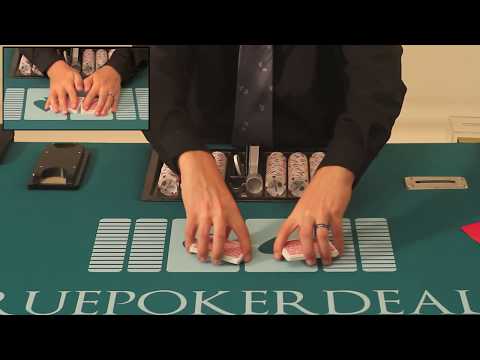
Live dealer games transmitted from professional studios bring the ceremony and transparency of physical tables straight to our screen, but the house edge rules are unchanged. The same mathematical frameworks hold to live roulette, live blackjack, and live baccarat as their RNG counterparts. The difference lies in tempo and atmosphere. A live blackjack table handles roughly 60 to 80 hands per hour, implying our hourly expected loss at a 0.5% edge game is considerably lower than on a rapid-fire digital version that handles hundreds of hands in the same period. Slower play safeguards a bankroll purely by cutting the volume of action subjected to the edge per unit of time.
We also need to watch for side bets that plague many live game interfaces. The “perfect pairs” or “21+3” side bets on live blackjack typically carry house edges north of 3% and can skyrocket past 10% for specific payouts. These optional extras are mathematically unrelated of the main bet and are pure entertainment expenditure rather than sensible wagering. Enjoy them for a flutter, but do not misinterpret them for part of a disciplined strategy. The live casino environment is immersive and interactive, and holding our heads on the core low-edge bets makes the experience both pleasurable and enduring.
Video Poker machine: The Thinking Player’s Slot Machine
Video poker bridges the gap between the automatic spin of a slot and the cerebral engagement of blackjack. The house edge on a full-pay Jacks or Better machine, when played with optimal strategy, stands at an enviable 0.46%. “Full-pay” refers to the paytable itself, and this is where our vigilance rewards us. A 9/6 Jacks or Better machine pays nine coins for a full house and six for a flush on a single-coin bet. Many inferior versions cut these payouts down to 8/5 or even 7/5, increasing the house edge to over 2% or far worse. Mastering to scan a paytable takes ten seconds and can save us a fortune over a year of casual play.
The game demands that we choose which cards to hold and which to discard after the initial deal, and these choices have mathematically correct answers. Strategy charts are readily found and simple to memorise for a single variant. The reward for this modest effort is a game that operates with a house edge comparable to the best blackjack tables, played at our own pace with no dealer pressure. For anyone who prefers solitary, methodical gaming, video poker offers an underappreciated corner of the casino library that genuinely deserves more attention.
Slots, RTP, and the Unseen Work of Variance
Slot machines express their mathematical engine through return to player percentage, or RTP, which is simply the inverse expression of the house edge. A slot with a 96% RTP carries a 4% house edge over its theoretical lifetime. The crucial difference between slots and table games is that we cannot apply strategy to alter this number. The machine’s random number generator executes a pre-programmed mathematical model that guarantees the RTP over millions of spins, but individual sessions can deviate wildly. A high-RTP slot with low volatility will offer frequent small wins that keep our balance ticking over steadily, while a high-volatility title with the same RTP might eat twenty spins in a row before erupting with a massive payout.
We see that many players misinterpret RTP as a promise for each session. It is not. If a slot has a 96% RTP, we cannot assume to deposit £100, spin all evening, and walk away with exactly £96. The return is distributed unevenly and unpredictably. That is precisely what makes slots so exciting. The practical lesson is to examine the game’s information panel before loading it up. Reputable providers always display the RTP, and we should treat it as one factor alongside volatility, theme, and bonus features. Chasing the absolute highest RTP while ignoring volatility can lead a frustrating experience if our bankroll is not sized for long dry spells.
Actionable Steps to Implement House Edge Knowledge Right Away
We may convert all this theory into an practical checklist for our next next session. First, scan the game lobby for the specific variant names: European roulette, not American; full-pay video poker, not short-pay; blackjack with 3-to-2 payout, not 6-to-5. Second, open the information or help panel of any slot before loading it, and note the RTP. Third, decide on a session bankroll before logging in, and mentally calculate the rough expected cost based on your chosen game’s edge. Fourth, if activating a bonus, pause to read the wagering requirement and game contribution percentages; do the maths on whether clearing it is achievable and worthwhile.
Fifth, confirm that live dealer games you intend to join are running at a suitable pace and that you understand the side bet paytables before clicking them. Sixth, verify that your account verification documents are uploaded so that when you eventually request a withdrawal, the process moves at its fastest possible speed. These six steps require perhaps five minutes of preparation but can materially protect a bankroll over dozens of sessions. The house edge never rests, but we can choose which edge we face and how we structure our play around it. That agency transforms gambling from passive consumption into an informed, informed pastime where the thrill comes from winning sessions within a known framework, not from ignoring the rules of the game.
FAQ
Is it true that the house edge imply I will certainly lose money each time I play?
Certainly not. The house edge is a long-term statistical average calculated over millions of bets. In a particular session, variance can and frequently does produce successful results. You might finish a weekend substantially up even on a game with a comparatively high edge. The edge merely describes the casino’s mathematical margin over vast sample sizes, not a certain outcome for your particular evening of play.
What casino game delivers the least possible house edge?
Blackjack played with perfect basic strategy on a table with player-friendly rules, such as 3-to-2 payout for naturals and dealer standing on soft 17, can hold a house edge as low as 0.5%. Full-pay Jacks or Better video poker arrives at about 0.46% with optimal play. The banker bet in baccarat stands at 1.06%. French roulette even-money bets with the la partage rule drop to 1.35%.
For what reason do slot machines rarely display the term “house edge” but always show RTP?
The RTP, or return to player, is simply the positive framing of the same mathematical concept. A 96% RTP means the slot in theory returns £96 for every £100 wagered over its lifetime, which equates to a 4% house edge. The industry uses RTP because it sounds more player-centric, but the underlying arithmetic is the same. Both figures describe the same long-term expected value from different perspectives.
Can wagering requirements render a bonus completely worthless?
Indeed, they can. If a bonus requires you to wager a large multiple of the bonus amount on games with a high house edge, the expected loss during the wagering period may surpass the bonus value itself. Additionally, if your preferred low-edge games contribute only a fraction of each wager towards the requirement, the real turnover needed can become unrealistically large. Always crunch the numbers before accepting.
Does the house edge the same on mobile and desktop versions of the same game?
Indeed. The mathematical properties, including the house edge and RTP, are determined by the game’s server-side software and are unchanged regardless of the device you use. Whether you play European roulette on a phone, tablet, or computer, the edge remains 2.70%. The user interface adapts to screen size, but the underlying random number generator and paytable structure are unchanged.
In what way do I check whether a UK casino is genuinely licensed and safe?
Scroll to the base of the casino’s homepage and look for the UK Gambling Commission logo accompanied by a licence number. You can visit the UKGC’s public register online and input that number to validate the operator’s current status. A legitimate licence signifies the games have been independently tested for fairness, your funds must be segregated, and you have recourse to a formal complaints process if disputes arise.
Are side bets in live blackjack and baccarat carry different house edges from the main bet?
Almost always, and they are typically far worse. Popular blackjack side bets like “perfect pairs” or “21+3” often hold house edges exceeding 3%, with some paytable variants climbing beyond 10%. The baccarat tie bet is a notorious edge trap at over 14%. View side bets as optional entertainment wagers with a separate, much higher cost, and never incorporate them in a low-edge strategy without checking their specific house edge first.